
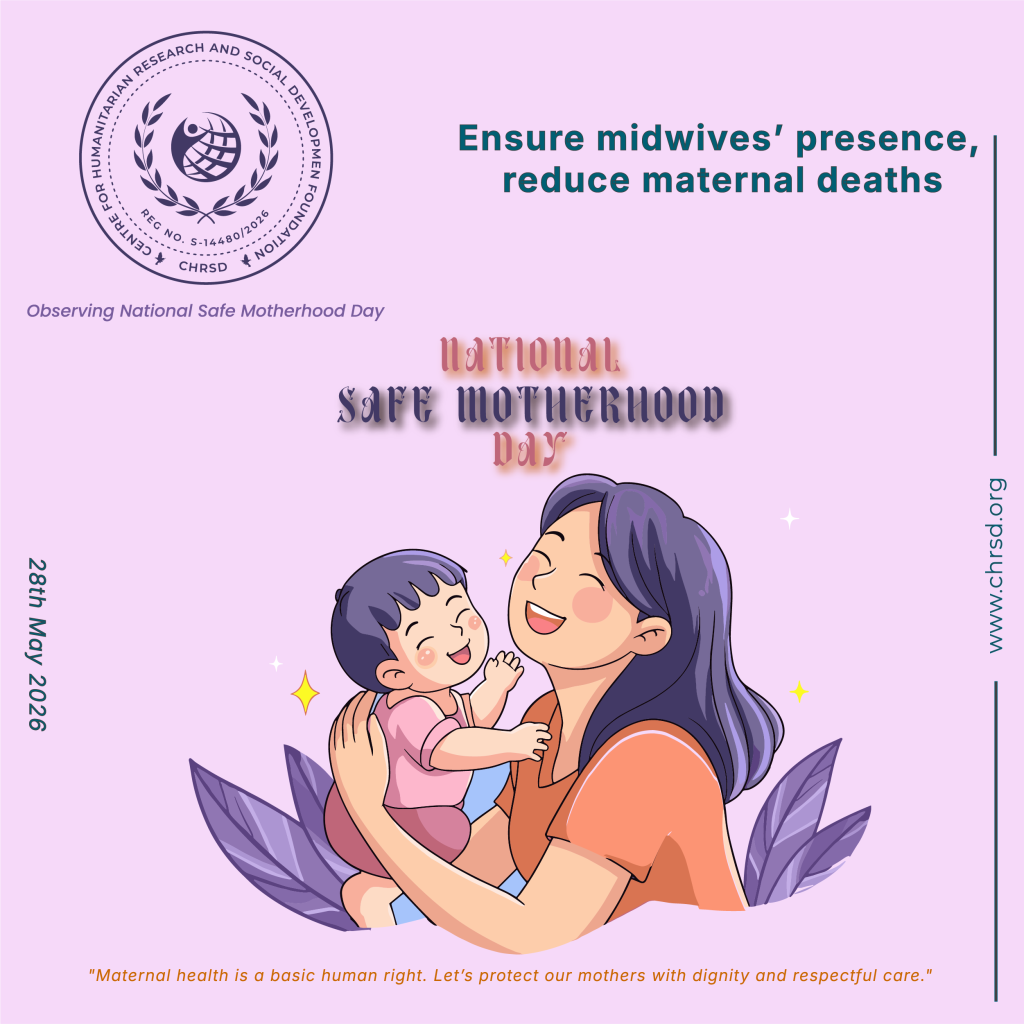
Every year on May 28, Bangladesh observes National Safe Motherhood Day alongside the International Day of Action for Women’s Health. The occasion serves as both a moment of reflection and a renewed call to action to ensure that no woman loses her life while giving birth.
This year, the Center for Humanitarian Research & Social Development Foundation (CHRSD) marked the day through a public awareness campaign across Dhaka, carrying a simple but urgent message:
“Ensure midwives’ presence, reduce maternal deaths.”
Posters, banners, and festoons were displayed at several strategic locations including Motijheel, Dainik Banglar Moor, and surrounding areas of the CHRSD Head Office to raise awareness about maternal health rights and the importance of dignified maternity care.
Bangladesh’s Progress — and the Challenges That Remain
Bangladesh has made notable progress in reducing maternal mortality over the past two decades. According to national and international estimates, maternal deaths declined significantly from 233 deaths per 100,000 live births in 2005 to 194 in 2014. Facility-based deliveries have also increased steadily, reflecting improved access to institutional healthcare services.
Yet behind these achievements lies a troubling reality.
Thousands of women across the country still face barriers to safe pregnancy and childbirth due to poverty, geographic inequality, inadequate healthcare infrastructure, and the absence of respectful maternity services.
Women living in remote and underserved regions continue to struggle to access emergency obstetric care. In urban settings, many low-income families remain excluded due to high medical costs, overcrowded hospitals, and inconsistent service quality.
At the same time, indirect causes of maternal death — including diabetes, hypertension, anemia, and delayed pregnancy-related complications — have risen sharply over the past decade. Long-term childbirth injuries such as obstetric fistula continue to leave lasting physical, emotional, and social consequences for many women.
Safe Motherhood Means More Than Survival
Safe motherhood cannot be measured solely by survival rates.
A woman’s dignity, autonomy, privacy, and emotional wellbeing during pregnancy and childbirth are equally important. Respectful maternity care is not optional — it is a fundamental human right.
Article 25 of the Universal Declaration of Human Rights recognizes the right to healthcare and specifically emphasizes that motherhood and childhood deserve special care and assistance. Bangladesh has also committed to international conventions and development goals that support maternal health rights.
However, many women still experience neglect, verbal abuse, non-consented procedures, lack of privacy, and discrimination while seeking maternity services.
Respectful maternity care means ensuring:
- The right to informed consent and independent decision-making regarding medical procedures
- Respect for dignity, privacy, and confidentiality during childbirth
- Equal treatment regardless of income level, religion, ethnicity, age, or marital status
- Access to compassionate and non-discriminatory healthcare services
No mother should fear humiliation or neglect while bringing a child into the world.
Essential Steps for Safer Pregnancy
CHRSD encourages families and communities to become more informed and proactive in supporting maternal health. Key recommendations include:
- Antenatal Care: Pregnant women should complete at least four antenatal check-ups at a hospital or Union Health Complex during pregnancy.
- Vaccination: Expectant mothers should receive two doses of the TT vaccine between the fourth and eighth months of pregnancy.
- Recognizing Danger Signs: Immediate medical attention should be sought if any of the following symptoms occur:
- Severe bleeding
- High fever lasting more than three days
- Convulsions
- Blurred vision or severe headaches
- Prolonged labor exceeding 12 hours
- Birth Preparedness: Families should arrange emergency transportation in advance, save emergency medical funds, and identify at least two potential blood donors beforehand.
Taking the Conversation Beyond Borders
To continue the global conversation on maternal health and gender equity, CHRSD is hosting an international virtual webinar titled:
“A Commitment to Safeguarding the Lives of the Most Vulnerable Women: Reducing Maternal Mortality in South Asia”
Date: Thursday, May 28, 2026
Time: 8:00 PM – 10:30 PM (Bangladesh Time)
Platform: Virtual
The webinar will bring together advocates, researchers, and development professionals to discuss policy gaps, healthcare inequality, and strategies for reducing preventable maternal deaths across the region.
National Safe Motherhood Day should not remain a symbolic annual observance. It must become part of a sustained national movement to protect the lives, rights, and dignity of every mother.
Because every mother deserves more than survival — she deserves respect.