

What 202 Patient Records Told Us About Our Own Data
A systematic review of patient records at Deora, Tongi’s neighbourhood Free Eye Care Camp — uncovering data errors, clinical patterns, and recommendations for cleaner record-keeping going forward.
01 — Overview
At a Glance
This report presents a complete data quality audit and clinical summary of patient records maintained at our Deora, Tongi clinic. The dataset covered a total of 202 patients (after removing one phantom row), with records spanning gender, date of birth, contact information, occupation, medical complications, and treatment decisions such as dilation and spectacle prescription.
Upon review, 38 data errors were identified and corrected, including critical medical terminology misspellings, inconsistent casing, occupation mismatches based on patient age, and invalid phone number entries. A further set of records was flagged for manual verification.
02 — Patient Demographics
Who Are Our Patients?
The patient base is nearly balanced by gender — 100 males (49.5%) and 102 females (50.5%). The largest age cohort is 18–29 years (33.2%), followed closely by 30–44 years (29.2%), reflecting that the clinic primarily serves working-age adults from the surrounding Tongi and Gazipur areas.
Patient Origins
The majority of patients reside in Deora, Tongi, with secondary clusters from Cherag Ali (Tongi), College Gate (Tongi), Abdullahpur, Gazipura, Ashulia, and Board Bazar (Gazipur). This suggests the camp’s primary catchment area is hyper-local — within a 5 km radius.
Occupation Profile
Employment and Student are the two dominant occupational categories, collectively accounting for nearly half of all patients. Teachers, business owners, and shopkeepers make up the rest of the working population.
03 — Clinical Findings
Medical Complications: What We’re Treating
Refractive Error is the most common presenting complaint (51 patients, 25.2%), followed by Dry Eye (41 patients, 20.3%) and Medication-related visits (32 patients, 15.8%). Together, these three categories account for over 61% of all patient visits.
It is worth noting that Presbyopia — age-related near vision loss — accounted for 23 cases. Cross-referencing with age data, three of these cases involved patients under 18, which is clinically improbable and has been flagged for re-verification.
Condition Breakdown by Gender
Refractive Error shows a notable male skew (33 male vs 18 female). Dry Eye and Eye Infection, conversely, are more prevalent among female patients. This aligns with broader epidemiological trends observed in South Asian ophthalmology literature.
| Medical Condition | Total | Male | Female | % of Total | Status |
|---|---|---|---|---|---|
| Refractive Error | 51 | 33 | 18 | 25.2% | Common |
| Dry Eye | 41 | 18 | 23 | 20.3% | Common |
| Medication | 32 | 15 | 17 | 15.8% | Routine |
| Eye Infection | 24 | 8 | 16 | 11.9% | Common |
| Presbyopia | 23 | 10 | 13 | 11.4% | Age-related |
| Cataract | 13 | 7 | 6 | 6.4% | Age-related |
| Blur Vision | 10 | 4 | 6 | 5.0% | Symptom |
| Other / Rare | 8 | 5 | 3 | 4.0% | Specialist |
Dilation & Spectacle Prescription
Key Clinical Observation: 53.9% of patients were prescribed spectacles, while 44.6% required no spectacle correction. Six patients (3.0%) were referred onward — typically for high myopia or conditions requiring specialist care. Dilation was performed in 44.6% of consultations, consistent with routine eye examination protocols.
04 — Data Quality Audit
Errors Found & Corrected
The raw dataset contained 38 correctable errors across multiple fields, plus a phantom row (Row 204) that contained only the number “202” with no patient data. Below is a breakdown by error category.
Corrections Applied
| Error Type | Field | Count | Example (Before → After) | Severity |
|---|---|---|---|---|
| Medical terminology misspelling | Medical Complication | 22 | “Pres Biopia” → Presbyopia | High |
| Occupation typo | Occupation | 3 | “Emplyment” → Employment | Low |
| Case inconsistency | Dilation / Spectacle / Gender | 3 | “no” / “male” → No / Male | Low |
| Invalid medical entry | Medical Complication | 2 | “Good” → None | Medium |
| Spectacle field typo | Spectacle | 1 | “Reffered” → Referred | Low |
| Patient name typo | Name | 1 | “Ms.Jhuma Aker” → Ms.Jhuma Akter | Medium |
| Phantom / junk row | Name | 1 | Row 204: “202” → Deleted | High |
| Other medical typos | Medical Complication | 5 | “Headace”, “Pterygiun”, “Miopia” → corrected | High |
Records Flagged for Manual Review
The following issues could not be auto-corrected and require verification against original registration forms or direct patient contact:
- Row 19 — “Re”: Only 2-character name recorded. Likely an incomplete entry. Verify original form.
- Row 28 — Ms. Akhi: Phone has 11 digits (17191416165). One digit is extra — verify correct number.
- Row 29 — Ms. Rita: Phone has only 9 digits (189191235). One digit is missing.
- Row 47 — Ms. Kulsuma Akter: Phone has 11 digits (17949199252). One extra digit.
- Rows 34, 36, 49 — Ms. Munni, Ms. Shorifa, Ms. Rumana: Ages 12–14, yet listed as “Employment”. Likely Student — confirm with family.
- 3 Presbyopia cases under age 18: Presbyopia is clinically rare/impossible below 18. Diagnoses should be re-verified.
- 156 missing phone numbers (77.2%): Severely limits ability to follow up with patients. Recommend collecting at next visit.
05 — Recommendations
Improving Record Quality Going Forward
1. Standardise Medical Terminology
A dropdown or controlled vocabulary list for the “Medical Complication” field would eliminate free-text spelling errors such as “Pres Biopia,” “Headace,” and “Pterygiun.” These are high-severity errors because they affect clinical searchability and reporting accuracy.
2. Validate Phone Numbers at Entry
Bangladeshi mobile numbers follow the format 01X-XXXXXXXX (11 digits). A simple input validation rule would have caught the three malformed entries immediately. More importantly, 77.2% of records have no phone number at all — this must be prioritised at point-of-registration.
3. Use Age-Aware Occupation Fields
Three patients aged 12–14 were classified as “Employment.” An age-aware validation rule (e.g., flagging “Employment” for patients under 16) would surface such mismatches in real time.
4. Standardise Field Casing
Fields like “Dilation,” “Spectacle,” and “Gender” should enforce title case at entry (Yes/No, Male/Female). This prevents fragmented queries and inconsistent reporting.
5. Remove Phantom / Test Rows Before Archiving
Row 204 contained only the number “202” — likely a row count check note left during data entry. A monthly data hygiene review would catch such entries before they reach the archive.
Bottom Line: The clinic’s patient base is well-documented in terms of demographics and clinical outcomes. The primary data quality gap is in contact information and standardised vocabulary. Addressing these two issues alone would raise data reliability significantly and improve the ability to conduct meaningful clinical audits in the future.
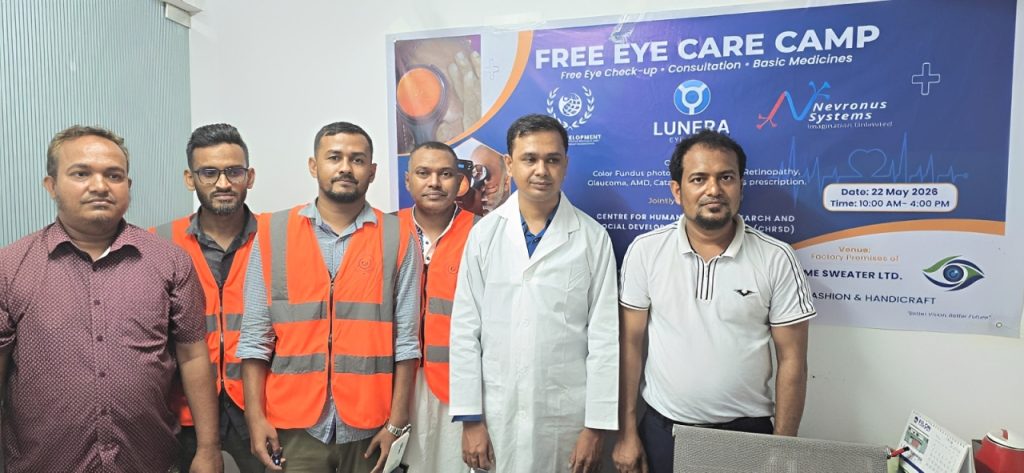
TEAM CHRSD at Free Eye Care Camp May’26